Best Saddle Pad Storage Tips and Tricks
If you want your saddle pad to last, how you store it matters.
Saddle Pad Storage Tips
A quality wool saddle pad is built to handle hard work, absorb moisture, and support your horse’s comfort ride after ride. Wool is naturally breathable and able to absorb moisture vapor, then release it back into the air. That is one of the reasons 100% pure wool performs so well under saddle, but it is also why proper storage is so important.
Storing your pad the wrong way can trap sweat, heat, and moisture, which may shorten the life of the pad and affect how fresh and ready it feels for the next ride. The good news is that a few simple habits can help protect your investment and keep your wool pad in top condition.
Why Proper Saddle Pad Storage Matters
After a ride, your saddle pad has done an important job. It has absorbed moisture from your horse’s back while helping with airflow and comfort. Because wool works by managing moisture and allowing it to evaporate, your pad needs time and space to breathe after use.
When a pad is put away damp, smashed under tack, or left in a hot enclosed space, that trapped moisture has nowhere to go. Over time, poor storage habits can lead to odors, excess wear, breakdown of your wool pad, and a pad that simply does not perform the way it should.
1. Always Let Your Saddle Pad Air Dry After Riding
One of the best things you can do for your wool saddle pad is let it air dry completely after each use.
After you unsaddle, place the pad where air can circulate around it. Do not fold it up immediately and do not toss it into a trailer corner or tack room bench while still damp. Wool is designed to manage moisture, but it still needs airflow so that moisture can evaporate fully.
A dry pad is more comfortable for your horse, better for the longevity of the wool, and much more pleasant to use the next time you ride.
2. Never Store a Pad Under a Saddle
A common mistake is leaving a saddle pad stored directly under a saddle. It may seem convenient, but it is not ideal for wool.
When a pad is left under a saddle, the wool stays compressed and airflow is reduced. That makes it harder for any remaining moisture to escape. Compression over long periods can also work against the natural loft and resilience you want from a quality wool pad.
Instead, remove the pad after riding and let it rest on its own in a way that allows it to breathe.
3. Do Not Stack Pads on Top of Each Other for Storage
Just like storing a pad under a saddle, stacking pads tightly on top of one another can trap moisture and reduce ventilation.
If you have multiple pads, avoid piling them together while they are still warm or damp from use. Give each one time to dry out completely before placing it back in storage. Once fully dry, store them in a way that avoids crushing them under heavy tack or bulky equipment.
4. Avoid Hot, Humid, Enclosed Storage Areas
Wool performs best when it can breathe, so enclosed hot and humid environments are not the best place to keep your saddle pads.
That means you should avoid storing wool pads long-term in:
- closed trailers for permanent storage
- damp tack rooms
- poorly ventilated storage bins
- hot, sealed spaces where moisture can build up
If your tack room tends to stay humid, improve airflow as much as possible. A cool, dry, ventilated area is a much better option.
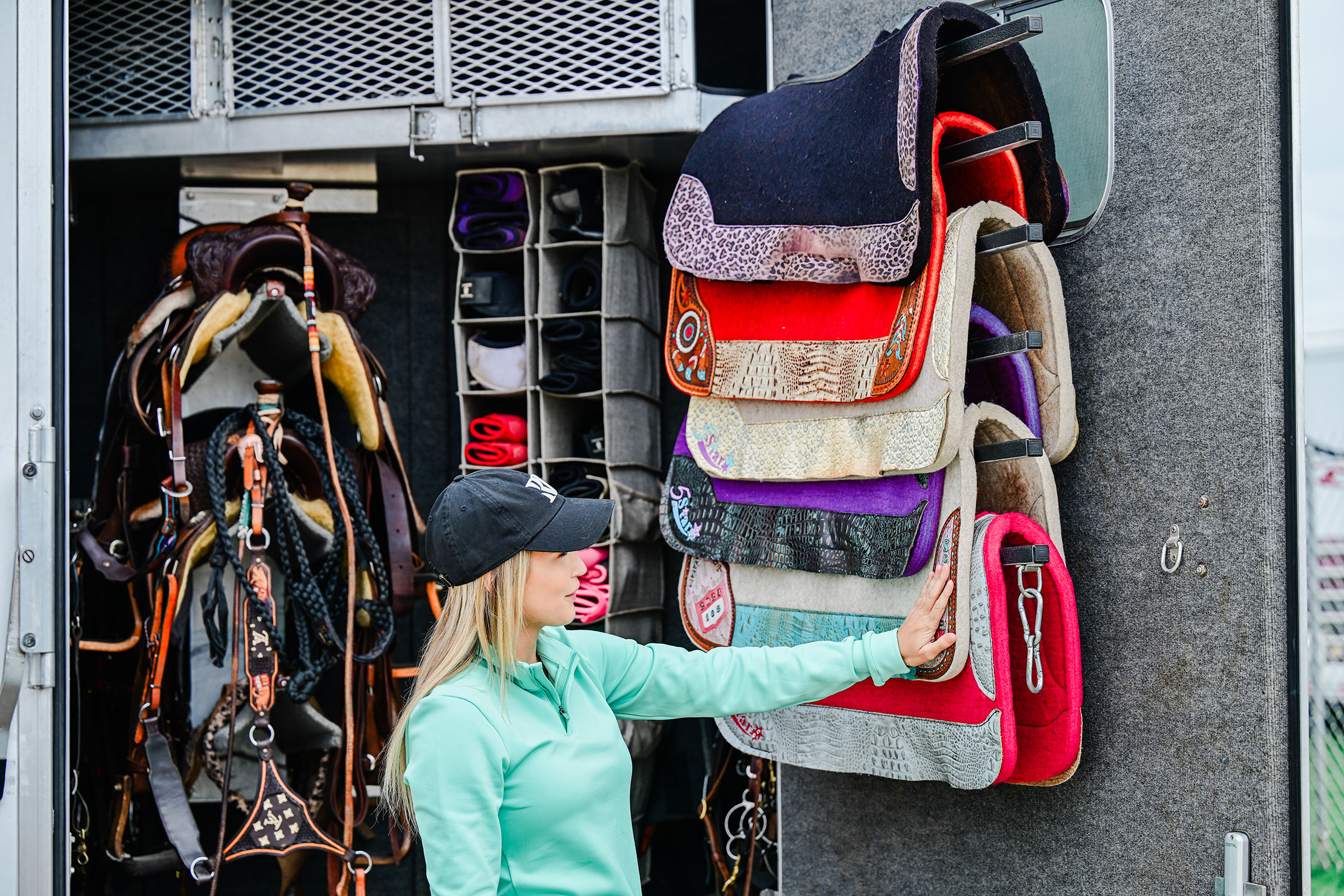
5. Store Your Pad in a Way That Supports Its Shape
Once your pad is clean and fully dry, store it so it keeps its shape.
Avoid forcing it into tight containers, bending it sharply, or cramming it into crowded spaces. A wool saddle pad is meant to contour and perform, so you want to keep it in a natural position whenever possible.
The goal is simple: protect the structure of the pad while allowing air circulation.
6. Clean Off Hair and Dirt Before Long-Term Storage
Before putting a saddle pad away for a longer stretch, brush off loose hair, dirt, and debris.
Keeping the surface clean helps your pad stay fresh and ready to use. You do not have to overcomplicate it — just make sure your pad is dry, reasonably clean, and stored in a breathable environment.
7. Make Post-Ride Pad Care Part of Your Routine
The best storage trick is consistency.
A simple routine can make a big difference: remove the pad after each ride, let it air dry, brush off hair and dirt, and store it in a cool dry place where it is not crushed or sealed away.
That small effort helps preserve the qualities that make 100% pure wool such a trusted choice in the first place: breathability, moisture management, and dependable performance.
Final Thoughts on Saddle Pad Storage
When it comes to saddle pad storage tips, the biggest takeaway is this: let wool breathe.
Do not store your pad under a saddle. Do not trap it beneath other pads. Do not leave it in a hot, humid, enclosed space. And never put it away damp.
Instead, give your 100% pure wool saddle pad the airflow and care it needs after every ride. A little attention goes a long way in protecting performance, extending pad life, and keeping your horse comfortable every time you saddle up.
Keep Your Saddle Pad Clean, Too
Proper storage is only one part of extending the life of your saddle pad. Regular cleaning also helps maintain performance and keep your wool pad in top condition.
To learn more about deep cleaning your saddle pad, read our article: Soak to Activate: The Key to Deep Cleaning Your Saddle Pads.
You can also shop our Saddle Pad & Tack Cleaner to help care for your pad between rides and over the long term.
Want to learn more about why wool performs so well? Visit Why Use Wool?.
For additional reading, this external resource on how to store wool properly offers more general wool care guidance.
Learn More About Saddle Pad Care
Want to see proper saddle pad care in action? Watch these helpful videos on storing your wool saddle pads.