
Common Signs Your Horse Saddle Pad Fit Isn’t Right
A saddle pad does more than sit between your saddle and your horse. It plays a critical role in comfort, performance, and long-term soundness.
If your horse is showing resistance, soreness, or changes in movement, your saddle pad could be part of the problem.
Here’s how to recognize the most common signs your horse’s saddle pad doesn’t fit right and what to look for instead.
1. Uneven Sweat Patterns
After a ride, your horse’s sweat marks can tell you a lot—but they’re often misunderstood.
What to look for:
- Dry spots surrounded by sweat
- Excessively wet areas in specific zones
- Inconsistent sweat patterns across the back
Why it matters:
Dry spots are commonly assumed to be a sign of poor fit, but that is not always the case.
With 100% pure wool saddle pads, dry areas can actually be a sign the pad is doing its job. Wool naturally wicks moisture away from the horse and distributes it across the pad, which can leave behind areas of dryness that reflect how the saddle is carrying weight.
In many cases, a larger, more even dry pattern that follows the shape of the saddle bars can indicate proper pressure distribution, not a problem.
Where you should be cautious:
- Small, isolated dry spots
- Uneven or asymmetrical patterns
- Dry spots paired with soreness or sensitivity
The key is to evaluate sweat patterns alongside your horse’s comfort. If your horse is moving freely, staying relaxed, and showing no soreness, larger dry areas are often nothing to worry about with your horse saddle pad fit.
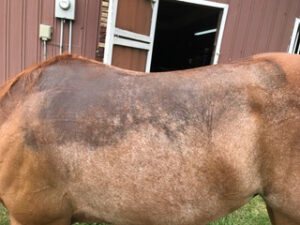
This is an example of an even sweat pattern without pressure points.
2. Soreness or Sensitivity
If your horse reacts when you brush, saddle, or touch certain areas, pay attention.
Common signs:
- Flinching when saddled
- Pinning ears during tightening
- Tenderness along the back or withers
- Swelling or heat after riding
Why it matters:
A poor-fitting pad can create pressure and friction, leading to soreness over time. This can quickly affect your horse’s willingness to perform and stay comfortable under saddle.
3. Pad Shifting or Slipping
A saddle pad should stay in place throughout your ride.
Signs of a problem:
- Pad sliding backward or forward
- Shifting side to side
- Bunching under the saddle
Why it matters:
Movement creates friction and uneven pressure. It can also signal that the pad is not properly contouring to your horse’s back or working in sync with your saddle.
4. Pressure at the Withers
The wither area is one of the most sensitive and important zones for proper fit.
Watch for:
- Pad pressing down on the withers
- Lack of clearance between saddle and withers
- Hair rubbed or worn at the front
Why it matters:
Insufficient clearance can lead to discomfort and restricted movement. Horses with higher or more defined withers often need additional structure and lift through this area to maintain proper fit.
5. Hair Rubs or White Hairs
Hair changes are one of the clearest indicators of long-term pressure issues.
Look for:
- Hair rubbed off after rides
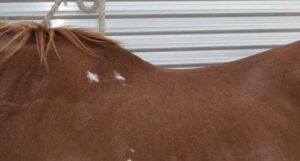
- White hairs developing over time
- Rough or damaged coat in specific spots
Why it matters:
White hairs are often permanent and typically indicate repeated pressure or friction. Catching fit issues early can help prevent lasting damage.
6. Behavioral Changes Under Saddle
Sometimes the first sign of a pad issue is a change in your horse’s attitude.
You may notice:
- Resistance to saddling
- Shortened stride or stiffness
- Bucking, pinning ears, or unwillingness to move forward
- Difficulty bending or engaging
Why horse saddle pad fit matters:
Discomfort from poor pad fit can affect how your horse moves and responds. What may seem like a training issue can often be traced back to discomfort.
7. Lack of Spinal Clearance
A saddle pad should support the saddle without putting pressure on the spine.
Check for:
- Pad collapsing into the spine channel
- No visible clearance along the topline
- Compression directly over the spine
Why it matters:
Direct pressure on the spine can lead to pain and long-term soundness issues. A properly contoured pad helps maintain a clear channel and even weight distribution.
What a Proper Fit Should Look Like
A well-fitting saddle pad should:
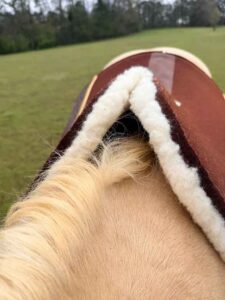
- Follow the natural contour of your horse’s back
- Provide even contact without pressure points
- Maintain wither clearance throughout the ride
- Stay in place without shifting or bunching
- Support your saddle without interfering with its fit
Pads made from 100% pure wool are especially effective because they conform naturally, wick moisture, and help distribute pressure evenly when properly fitted.
Final Thoughts
Your horse saddle pad fit is a key part of your horse’s comfort system. When it fits correctly, it supports performance, protects your horse’s back, and works with your saddle.
If you notice any of these signs, it’s worth taking a closer look at your setup. Small adjustments in pad fit can make a noticeable difference in how your horse feels and performs.
To learn more about the benefits of 100% pure wool when choosing a saddle pad read Why Wool?
To learn the importance of keeping your saddle pad clean, read about 5 Star’s Saddle pad Cleaner & Soak.